
Plumbing Resource
Why Is My Water Heater Not Making Enough Hot Water?
Running out of hot water can involve demand, capacity, controls, leaks, sediment, or components. Learn what to observe safely before requesting repair.
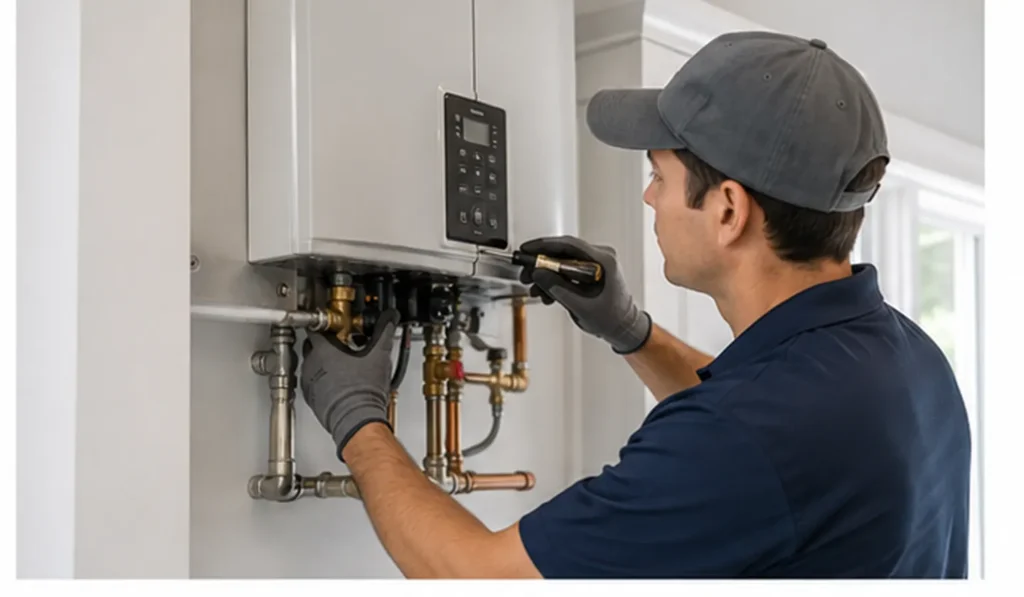
“Not enough hot water” is a symptom, not a diagnosis.
It can mean the water never becomes hot enough, it starts hot and runs out quickly, recovery takes longer than it used to, or one fixture seems cooler than the rest of the house. Those differences matter because they point to different categories of problems.
START BY DESCRIBING THE SYMPTOM PRECISELY
Ask:
- Is there no hot water at all, or just less than expected?
- Does the first shower get enough hot water but the next one does not?
- Did the problem begin suddenly?
- Is the problem at one faucet or throughout the home?
- Has household demand recently increased?
- Is recovery slower than it used to be?
- Is there visible leaking or an error code?
- What type of water heater is installed?
That information is safer and more useful than opening the unit and testing internal components yourself.
HOUSEHOLD DEMAND MAY EXCEED AVAILABLE DELIVERY
A water heater can be operating and still fail to meet peak household demand. Back-to-back showers, laundry, dishwashing, larger tubs, more occupants, or schedule changes can increase hot-water use.
A. O. Smith troubleshooting material identifies demand exceeding heater capability as one possible cause on applicable equipment. If the system has always struggled during heavy-use periods, capacity or delivery performance may be part of the discussion.
If the change is new, the question becomes why the same equipment is now delivering less than before.
ONE FIXTURE VERSUS THE WHOLE HOUSE
If only one shower or faucet seems too cool while other fixtures have normal hot water, the problem may be local to that fixture or its mixing/control components rather than the water heater itself.
Compare multiple fixtures before assuming the heater is failing.
CONTROLS OR HEATING COMPONENTS
On applicable electric models, heating elements, thermostats, sensors, or controls can affect performance. Gas-fired models use different controls and combustion components. Other water-heater technologies have their own components and diagnostic procedures.
These are professional-service areas when testing requires opening electrical covers, working around live voltage, accessing gas controls, or altering combustion or venting. A homeowner can report error codes, indicator lights, or exterior display information without opening protected compartments.
SEDIMENT OR SCALE
Manufacturer troubleshooting resources identify sediment or scale as a possible contributor on applicable equipment. The amount and impact depend on the water supply, heater design, maintenance history, and other factors. Unusual sound or reduced performance is worth mentioning, but it does not prove sediment is the cause.
LEAKS CAN REDUCE USEFUL HOT WATER
A plumbing leak on the hot-water side can reduce useful delivery. Visible water around the heater, hot-water piping, fixtures, or appliance connections deserves attention.
Do not touch leaking electrical equipment or assume a water heater is safe to operate when water is near electrical components.
TEMPERATURE SETTINGS AND SCALD RISK
Do not respond to a hot-water shortage by simply turning the temperature much higher. CPSC warns that hot tap water can cause serious scald burns and recommends 120°F as a residential scald-risk-reduction setting. Manufacturer instructions, system design, local requirements, and household health considerations can also matter.
If you are uncertain about the setting or the equipment, have a qualified person evaluate it rather than using a blog article to change gas, electrical, or safety controls.
SEASONAL AND INCOMING-WATER EFFECTS
On applicable systems, colder incoming water can increase the amount of heating required before water reaches the target temperature. Manufacturer technical guidance recognizes seasonal inlet-water changes as one possible factor in hot-water complaints.
That does not mean every winter shortage is normal. Compare current behavior with the unit's previous performance and household demand.
WHAT TO GATHER BEFORE CALLING
From the exterior only, when safe, note the fuel or energy type, tank versus another configuration, manufacturer/model if visible, approximate age if known, error codes or indicator lights, whether the issue affects all fixtures, when the shortage occurs, visible leaks, unusual sounds, and recent changes in household demand.
Do not open gas or electrical compartments to find information.
REPAIR OR REPLACEMENT?
Insufficient hot water does not automatically mean replacement is needed. A correctable control, component, mixing, leak, or maintenance issue may be involved on applicable equipment. In other cases, the current heater may no longer match household demand or may have broader condition problems.
That decision should follow an assessment rather than a symptom list.
Sources reviewed
Request Service
Call 1 725-745-6034Related Resources
What Size Water Heater Do I Need? Capacity, Household Demand, Fuel Type, and Space
Water-heater sizing depends on peak hot-water demand, delivery capacity, fuel type, space, and equipment requirements—not household size alone.
Read the guide