
Plumbing Resource
How to Check Your Water Meter for a Possible Hidden Plumbing Leak
A simple no-water-use meter check can reveal unexplained water use. Learn how to do it safely, what a changed reading means, and what it does not prove.
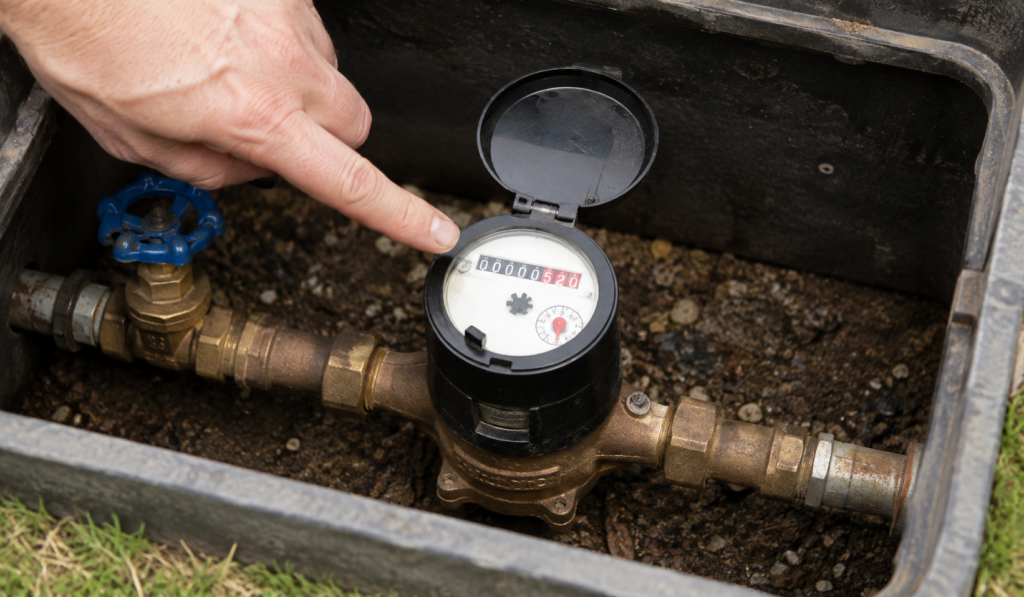
A water meter can answer one useful question: is water being measured when you believe the property is not intentionally using any?
That can be a strong clue when you suspect a leak. It is not a complete diagnosis. A meter cannot tell you whether water is escaping from a toilet, irrigation line, water heater, appliance connection, underground service line, or concealed interior plumbing.
WHAT THE TEST DOES
EPA WaterSense recommends comparing water-meter readings during a period when no water is being used. Its Home Maintenance guidance specifically says to read the meter, avoid water use, and read it again two hours later. If the reading changes, you probably have a leak.
The key is a true no-use period. A toilet refill, irrigation controller, ice maker, water softener, or appliance can change the reading without a hidden pipe leak.
STEP 1: IDENTIFY THE METER WITHOUT TAMPERING
Find the water meter and observe only customer-accessible information. Configurations vary. Do not break seals, open locked utility equipment, remove components, or manipulate the meter.
STEP 2: CREATE A NO-USE PERIOD
Turn off faucets, avoid showers and toilet flushing, pause washing machines and dishwashers, make sure outdoor faucets are off, account for irrigation, and consider automatic devices that may draw water.
STEP 3: RECORD THE STARTING READING
Write down or photograph the display from a normal safe position. Use the units shown on the meter.
STEP 4: WAIT WITHOUT USING WATER
Use the two-hour no-water-use period described by EPA WaterSense. If someone uses water, restart later rather than interpreting a contaminated test.
STEP 5: RECORD THE SECOND READING
If the meter did not change, the test did not show continuous measured use during that period. It does not rule out an intermittent leak.
If the meter changed and you are confident no intentional water use occurred, a leak becomes a reasonable possibility.
WHAT A CHANGED READING DOES NOT TELL YOU
It does not locate the water loss. Possible sources include a leaking toilet, dripping fixture, irrigation, appliance connection, water heater, underground service line, or concealed interior plumbing.
CHECK OBVIOUS SOURCES
A silently leaking toilet can use water without a puddle. Faucets, hose bibbs, appliance connections, and visible plumbing can also be checked safely.
DOCUMENT THE PATTERN
Keep both meter readings, start/end time, confirmation that automatic uses were inactive, recent bills, photographs of stains or dampness, and notes about when symptoms occur.
Sources reviewed
Request Service
Call 1 725-745-6034Related Resources
Main Water Line Repair or Replacement? Factors That Can Affect the Decision
Learn what can influence a main water line repair-versus-replacement discussion, including damage extent, material, failure history, access, and condition.
Read the guide
Why Did a Pipe Burst? Freezing, Pressure, Corrosion, and Other Failure Clues
Learn why pipes can burst or fail, including freezing, corrosion, pressure problems, and weakened connections—and what clues to document before calling.
Read the guide