
Plumbing Resource
Why Did a Pipe Burst? Freezing, Pressure, Corrosion, and Other Failure Clues
Learn why pipes can burst or fail, including freezing, corrosion, pressure problems, and weakened connections—and what clues to document before calling.
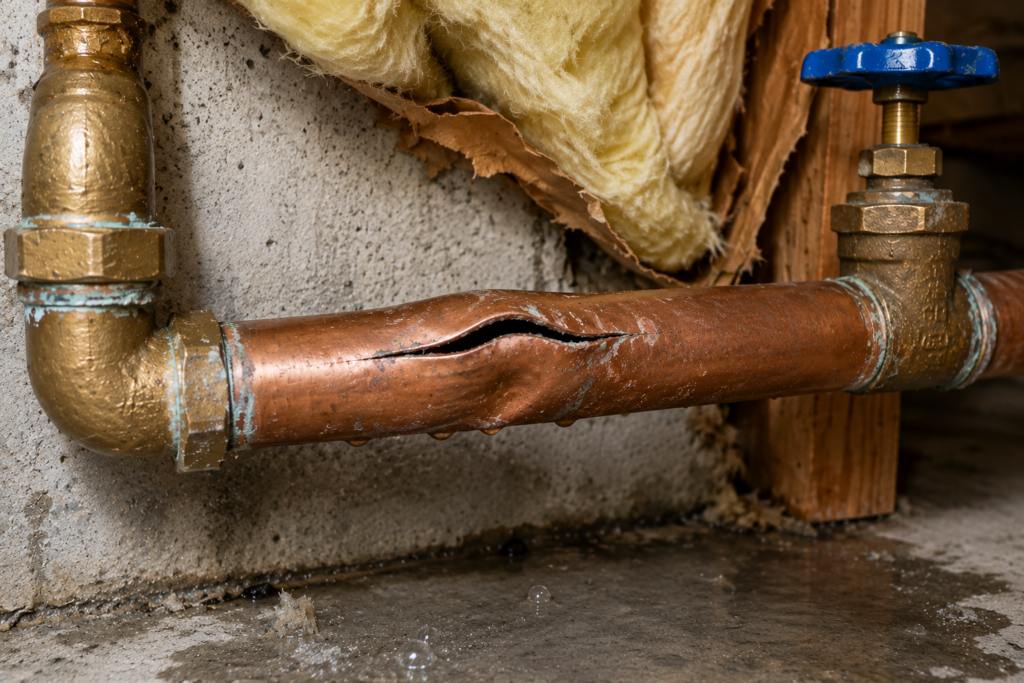
A burst pipe can look sudden, but the failure often reflects a condition that has been stressing or weakening the plumbing. Freezing is one familiar cause, but it is not the only one. Corrosion, unusual pressure conditions, weakened joints, physical damage, installation problems, and deterioration can also contribute.
The useful homeowner question is not “Which cause is definitely responsible?” from a distance. It is “What clues can I document so the problem can be evaluated efficiently?”
FREEZING AND EXPANSION
The American Red Cross explains that water expands as it freezes and that pressure can build inside plumbing. Pipes most exposed to severe cold include outdoor lines, piping in unheated crawl spaces, garages and attics, and lines near poorly insulated exterior walls.
Clues that freezing may have been involved include very cold weather immediately before the failure, a line in an unheated area, a faucet that had little or no flow, or other nearby pipes that also froze. These clues help frame the history, but they do not prove the exact cause.
WHAT THE LOCATION OF THE SPLIT CAN — AND CANNOT — TELL YOU
The visible split tells you where the pipe opened. It does not automatically tell you why it opened. A break in an exposed exterior-wall area may fit a freezing history; deterioration around a joint may raise different questions. But the location alone cannot distinguish freezing from corrosion, pressure, impact, installation stress, or another contributor. That is why the surrounding condition and recent history matter.
CORROSION AND DETERIORATION
EPA WaterSense notes that corrosion and old piping can contribute to household leaks. More broadly, EPA distribution-system research describes corrosion and material deterioration as factors that can weaken water infrastructure over time.
Visible pitting, flaking, mineral deposits, repeated pinhole leaks, old repair patches, or deterioration around fittings can be useful observations. Age alone is not a diagnosis. An older pipe may still be serviceable, while a newer component can fail because of damage, freezing, installation, or another condition.
PRESSURE AND SYSTEM CONDITIONS
EPA WaterSense also lists irregular water pressure among factors that can contribute to leaks. That does not mean every rupture is a pressure problem.
A homeowner should not diagnose pressure simply from the force of a faucet stream. If pressure is a concern, it can be measured with appropriate equipment. Treat pressure as one possible contributor, not a universal explanation for burst pipes.
FITTINGS, JOINTS, AND PHYSICAL STRESS
A plumbing system includes joints, valves, transitions, supports, and penetrations through walls and framing. Failure can occur at a fitting, a damaged section, or a point that has experienced movement or impact.
If the problem followed construction, remodeling, a freeze, an impact, or recent plumbing work, record that history. Do not dismantle the damaged area merely to identify a cause.
WHAT TO DOCUMENT
When the immediate water flow and area are safe, note where water first appeared, whether the visible damage is exposed or concealed, recent outdoor temperatures, whether flow changed before the failure, whether other fixtures behaved unusually, visible pipe material, signs of previous repairs, and photographs taken from a safe position.
These observations help an assessment. They do not replace one.
WHAT NOT TO DO
Do not cut open walls, work around wet electrical equipment, use an open flame to thaw plumbing, or enter an unsafe space to investigate. If water is near electrical equipment or another serious hazard, address safety first with the appropriate qualified professional.
REPAIRING THE BREAK VERSUS UNDERSTANDING THE CAUSE
A localized failure may sometimes be repairable. In other cases, surrounding material, access, condition, or a history of failures may lead to a broader repair discussion. The decision depends on actual conditions rather than a symptom list.
Sources reviewed
Request Service
Call 1 725-745-6034Related Resources
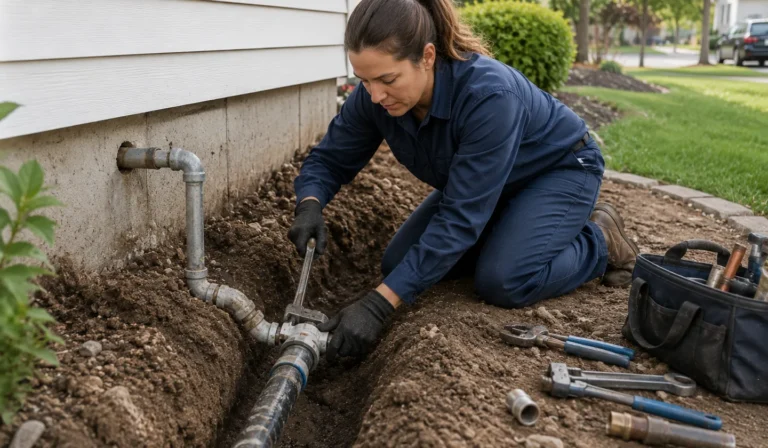
Main Water Line Repair or Replacement? Factors That Can Affect the Decision
Learn what can influence a main water line repair-versus-replacement discussion, including damage extent, material, failure history, access, and condition.
Read the guide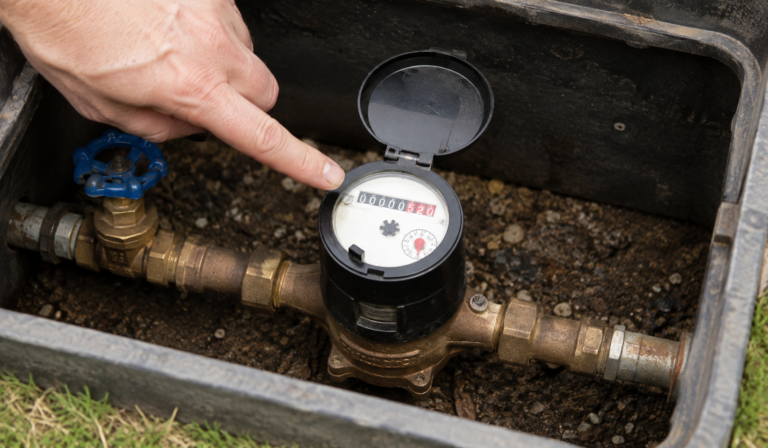
How to Check Your Water Meter for a Possible Hidden Plumbing Leak
A simple no-water-use meter check can reveal unexplained water use. Learn how to do it safely, what a changed reading means, and what it does not prove.
Read the guide