
Plumbing Resource
Main Water Line Repair or Replacement? Factors That Can Affect the Decision
Learn what can influence a main water line repair-versus-replacement discussion, including damage extent, material, failure history, access, and condition.
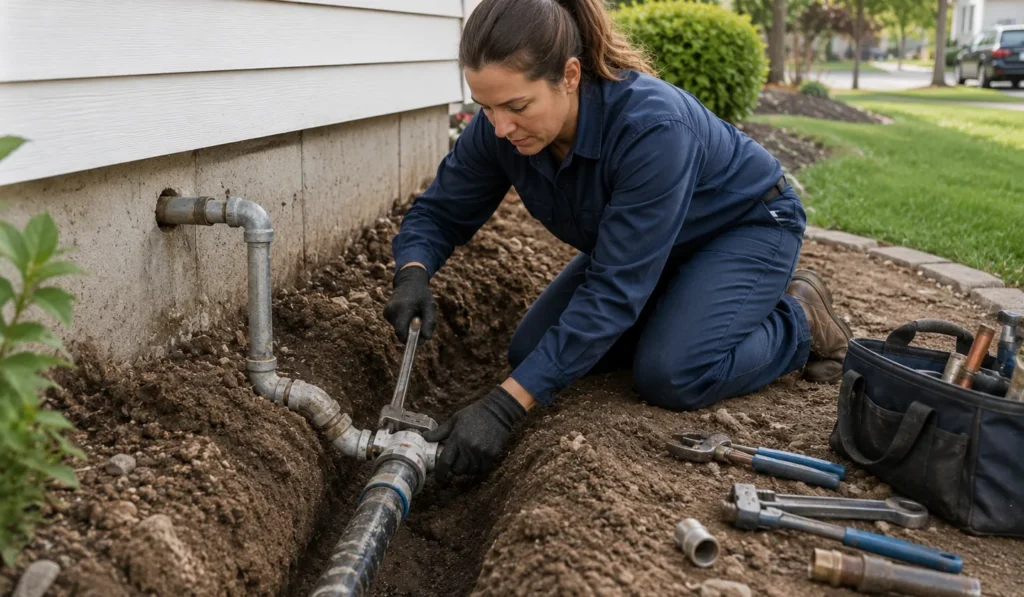
When a water service line has a confirmed problem, “repair or replace?” sounds simple. In practice, the answer depends on what is damaged, how much of the line is affected, material, condition, previous failure history, site access, and other property-specific factors.
EPA condition-assessment research makes a useful general point: better information about pipe condition supports better repair, rehabilitation, and replacement decisions and can help avoid premature replacement of sound pipe. Those studies focus largely on utility infrastructure, so they should be treated as decision principles—not as a homeowner-specific formula.
EXTENT OF THE KNOWN DAMAGE
A localized defect and a line with multiple problem areas are different situations. If damage is limited to one accessible location and surrounding pipe appears serviceable, a localized repair may be discussed. If problems are distributed or failures are recurring, broader work may deserve consideration.
There is no universal rule that one leak means repair or several leaks mean replacement.
PIPE MATERIAL AND CONDITION
Material matters because piping systems can deteriorate in different ways. Condition matters more than a date alone. Visible deterioration, corrosion, cracking, deformation, previous repair locations, and documented findings can influence the evaluation.
EPA background research on distribution-system integrity examines factors such as material, age, corrosion, and condition, but it does not create a residential replacement rule.
AGE IS CONTEXT, NOT AN AUTOMATIC CUTOFF
There is no single honest age that decides every residential service line. Soil, material, installation, water chemistry, pressure, loads, prior damage, and repair history can all influence performance.
Age can make condition assessment more important, but it should not be used as an automatic replacement trigger.
FAILURE HISTORY
Keep records of previous leaks, repair locations, photographs, invoices, utility notices, and pipe-material information. Repeated failures can be relevant context without creating a fixed replacement threshold.
ACCESS AND SITE CONDITIONS
Pavement, landscaping, depth, utility conflicts, driveways, retaining structures, and leak location can affect access. Access difficulty does not automatically determine the repair method. Do not assume extensive excavation, and do not assume a trenchless method is available or appropriate.
SYMPTOMS ARE INFORMATION, NOT A REPLACEMENT DECISION
Low pressure, unexplained meter activity, wet ground, or water near the service entry can be useful clues. They do not decide repair versus replacement by themselves.
OWNERSHIP IS A SEPARATE QUESTION
Responsibility boundaries vary by water system and property. The dividing point may depend on the utility, service configuration, easement, meter location, or another local rule. Confirm the applicable utility policy before assuming who owns or repairs a particular section.
WHAT TO PREPARE BEFORE CALLING
Gather where water is appearing, whether the meter shows unexplained use, whether pressure is affected throughout the home, approximate line age if known, documented material, prior repair history, utility name, meter location, photographs, and recent excavation, freeze, or impact history.
WHY ASSESSMENT MATTERS
Replacing sound pipe prematurely can create unnecessary cost and disruption. Repeatedly patching a line with broader deterioration may also be inefficient. The purpose of an assessment is to gather enough evidence to choose a repair scope appropriate to the confirmed condition, property, and available service options.
Sources reviewed
Request Service
Call 1 725-745-6034Related Resources
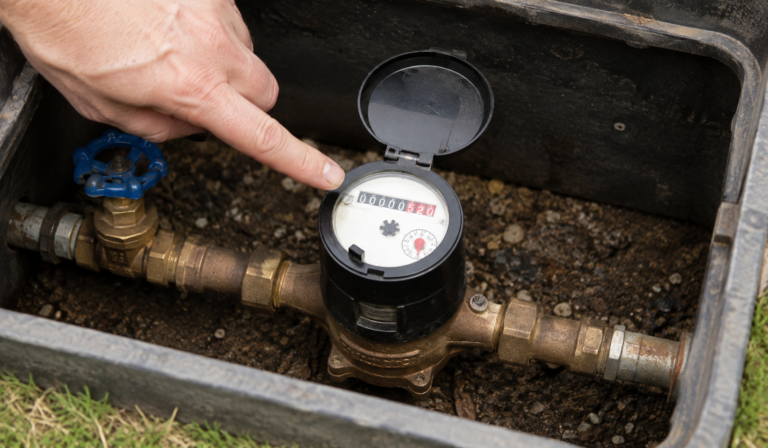
How to Check Your Water Meter for a Possible Hidden Plumbing Leak
A simple no-water-use meter check can reveal unexplained water use. Learn how to do it safely, what a changed reading means, and what it does not prove.
Read the guide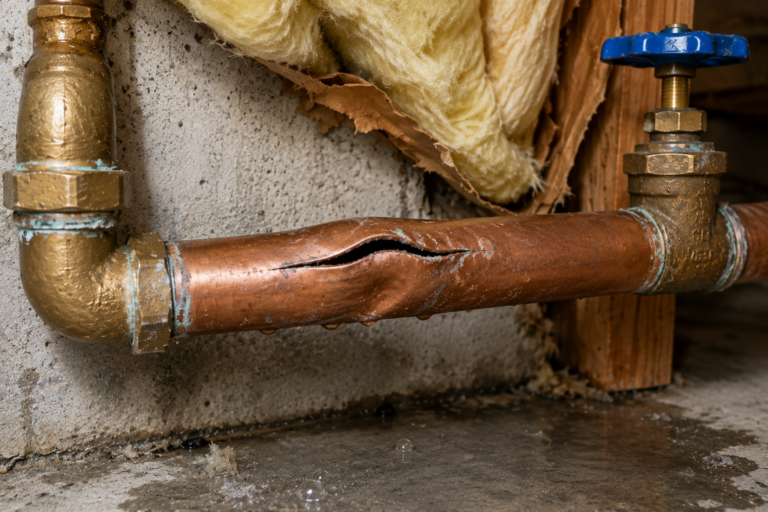
Why Did a Pipe Burst? Freezing, Pressure, Corrosion, and Other Failure Clues
Learn why pipes can burst or fail, including freezing, corrosion, pressure problems, and weakened connections—and what clues to document before calling.
Read the guide