
Plumbing Resource
What a Sewer Camera Inspection Can — and Cannot — Tell You
Sewer cameras can reveal visible pipe conditions, roots, debris, offsets, and defects—but they have limits. Learn what camera inspection can and cannot establish.
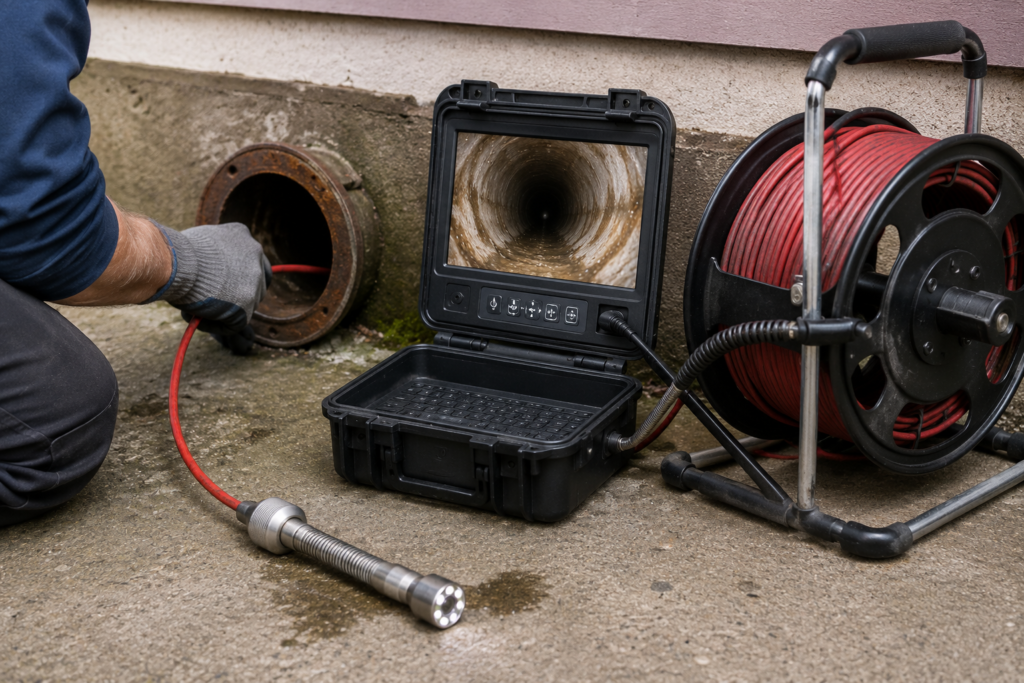
A sewer camera can be valuable because it lets a technician see the inside of an accessible section of drainage or sewer piping without opening the entire route.
But “camera inspection” is not the same as “the camera tells us everything.” Understanding both sides of that statement helps homeowners ask better questions and interpret recommendations more carefully.
WHAT A SEWER CAMERA CAN SHOW
EPA condition-assessment research describes CCTV as a way to identify visible internal conditions such as sediment, debris, roots, pipe sags or deflections, offset joints, cracks, leaks, and the location or condition of service connections.
NASSCO likewise treats detailed internal CCTV inspection as an important tool for assessing sewer-pipe structural and maintenance conditions.
Depending on access and visibility, a camera may therefore help document:
- roots or debris;
- visible obstructions;
- cracks or broken areas;
- offset joints;
- deformation or sagging visible from inside;
- service connections;
- visible leakage or infiltration;
- changes in pipe material or apparent size.
WHAT A CAMERA CANNOT SEE
A camera mainly sees the interior surface available to the lens. EPA notes that conventional CCTV provides a visual representation of the inside surface above the waterline. That means standing water, heavy debris, an obstruction, or poor visibility can hide part of the pipe.
CCTV also does not directly show every condition outside the pipe wall, the surrounding soil, every void or support problem, or the exact remaining structural strength of the pipe.
INSPECTION QUALITY MATTERS
The usefulness of a camera inspection depends on more than inserting a camera into the line. EPA says defect identification and pipe-condition assessment can depend heavily on operator interpretation, picture quality, and flow level. NASSCO also points to pipe diameter, material, flow conditions, lighting, and camera setup as factors in obtaining useful video.
A responsible interpretation should therefore distinguish what was clearly visible, what was obscured, and what the video could not establish.
WHY CLEANING MAY COME BEFORE INSPECTION
Heavy grease, roots, debris, or other material can make the pipe surface difficult to see. In some cases, cleaning or another preparation step may be needed to obtain a useful view.
That does not mean cleaning proves the pipe needs repair. It may simply improve visibility.
WHAT ABOUT STANDING WATER?
Water can obscure the lower portion of the pipe. Standing water may itself be an observation worth investigating, but the camera still cannot show what is hidden below an opaque water level.
CAN A CAMERA LOCATE THE PROBLEM?
Inspection equipment may provide distance information, and some service setups may use separate locating equipment. The safest homeowner question is not to assume precision but to ask what the provider's inspection records and how any location estimate was established.
CAN A CAMERA DIAGNOSE A BLOCKAGE?
It can show some visible restriction materials when conditions allow. If the camera cannot pass an obstruction, the pipe beyond that point has not yet been visually inspected.
CAN A CAMERA DECIDE WHETHER REPAIR OR REPLACEMENT IS NECESSARY?
Video can contribute important evidence, but repair decisions may depend on the defect type, extent, material, location, access, recurring symptoms, and other findings. One image should be interpreted in context.
QUESTIONS HOMEOWNERS CAN ASK
- What portion of the line was inspected?
- Was any part obscured by water, debris, or poor visibility?
- Did the line need cleaning before inspection?
- What specific condition was observed?
- Is the recommendation based on video alone or additional evidence?
- How was the location of the observed condition established?
- Does the proposed work address the condition that was actually documented?
WHY CAMERA INSPECTION CAN BE USEFUL
The main benefit is evidence: an accessible pipe interior can be observed directly rather than inferred only from symptoms. The main limitation is also evidence: only the visible and accessible conditions can be judged from the video.
Sources reviewed
Request Service
Call 1 725-745-6034Related Resources
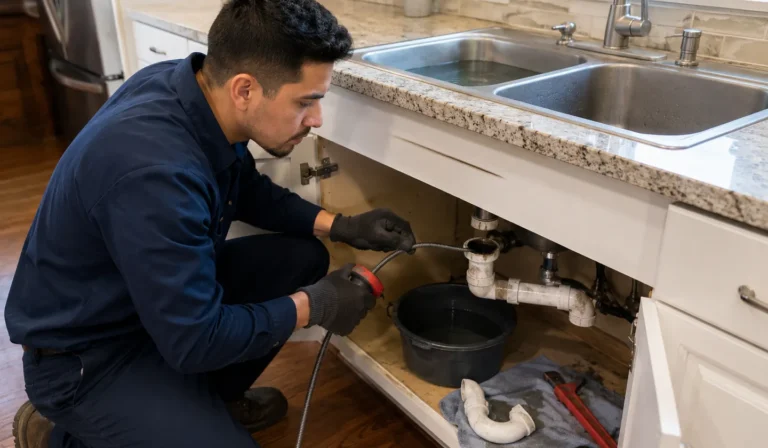
Why Does the Same Drain Keep Clogging After Plunging?
If the same sink, tub, or shower keeps clogging after plunging, learn how recurrence patterns can help describe the problem before you call.
Read the guide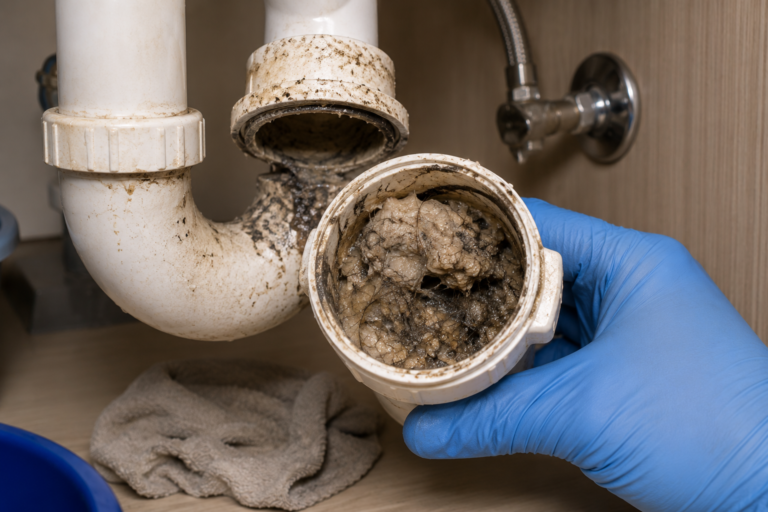
What Builds Up in Kitchen and Bathroom Drains—and Why Does It Keep Coming Back?
Kitchen grease and food differ from bathroom hair and soapy residue. Learn what can build up, why symptoms may return, and how to reduce new deposits.
Read the guide