
Plumbing Resource
Why Does the Same Drain Keep Clogging After Plunging?
If the same sink, tub, or shower keeps clogging after plunging, learn how recurrence patterns can help describe the problem before you call.
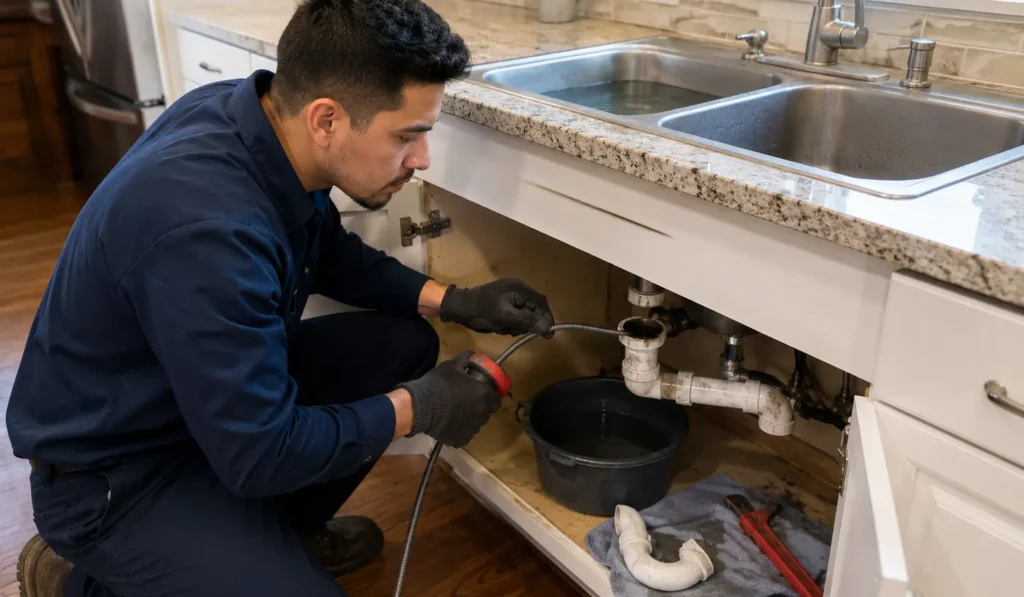
A plunger can restore flow without explaining why the drain clogged. If the same sink, tub, or shower slows or stops again, the useful clue is the recurrence itself.
That does not automatically mean the problem is deep in the sewer, and it does not prove plunging made the problem worse. It means the drain has not returned to reliably normal behavior.
START WITH THE PATTERN, NOT A REMOTE DIAGNOSIS
A few observations can make the service conversation much more useful:
- SAME FIXTURE ONLY: If one sink, tub, or shower repeatedly slows while nearby fixtures stay normal, the pattern is relatively localized.
- SEVERAL FIXTURES: If multiple fixtures become slow, gurgle, or back up together, the problem should be evaluated more broadly rather than treated as one recurring fixture clog.
- IMMEDIATE RECURRENCE: If flow improves only briefly and the same drain slows again within minutes or hours, the temporary clearing did not produce a stable result.
- RECURRENCE AFTER DAYS OR WEEKS: Note what the drain was used for before symptoms returned. The timing can help describe the pattern even though it does not identify the cause by itself.
- SUDDEN ONSET AFTER AN OBJECT MAY HAVE ENTERED: Mention that history. A foreign object can create a different problem from gradual accumulation.
WHY TEMPORARY FLOW IS NOT THE SAME AS A SOLVED PROBLEM
A drain may move water again even when the condition that caused the interruption has not been fully resolved. Material can remain, an object can still interfere with flow, or another localized restriction can still be present.
Grease, food waste, wipes, and other inappropriate materials are recognized blockage contributors. Detailed discussion of what commonly accumulates in kitchen and bathroom drains belongs in the separate drain-buildup guide; the important point here is that returning symptoms deserve attention to the recurrence pattern.
WHAT NOT TO ASSUME
A recurring same-fixture problem does not prove that the pipe is damaged, improperly sloped, or blocked in the main sewer. Those are possibilities that require evidence, not conclusions that can be drawn from recurrence alone.
Likewise, a good day after plunging does not prove the drain is permanently clear.
WHAT TO NOTE BEFORE CALLING
Record the exact fixture, whether the drain is slow or fully blocked, how long improvement lasts after plunging, whether the problem follows a particular use, whether an unusual object may have entered the fixture, whether there are odors or gurgling sounds, whether any other fixture is affected, and what products or methods have already been used.
Avoid repeatedly mixing or applying drain chemicals without understanding the problem. Follow product warnings and never mix incompatible chemicals.
WHEN TO MOVE BEYOND TEMPORARY CLEARING
If the same drain repeatedly blocks, the time between recurrences becomes shorter, water backs up, or additional fixtures become involved, a closer evaluation is reasonable.
Sources reviewed
Request Service
Call 1 725-745-6034Related Resources
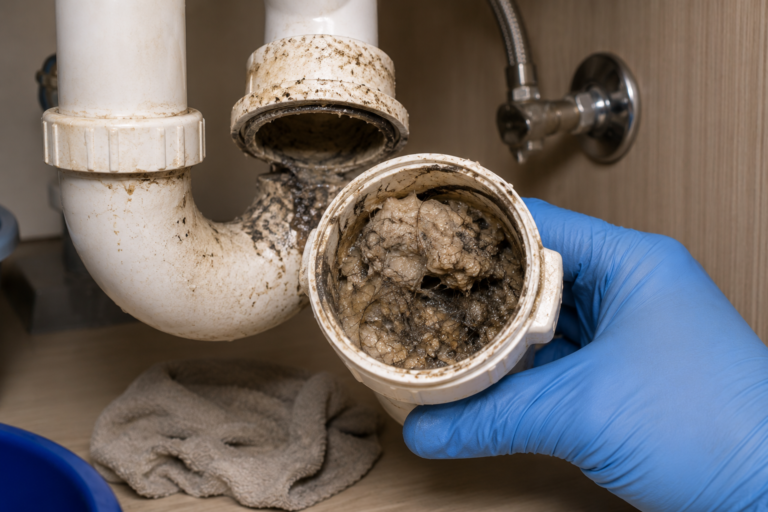
What Builds Up in Kitchen and Bathroom Drains—and Why Does It Keep Coming Back?
Kitchen grease and food differ from bathroom hair and soapy residue. Learn what can build up, why symptoms may return, and how to reduce new deposits.
Read the guide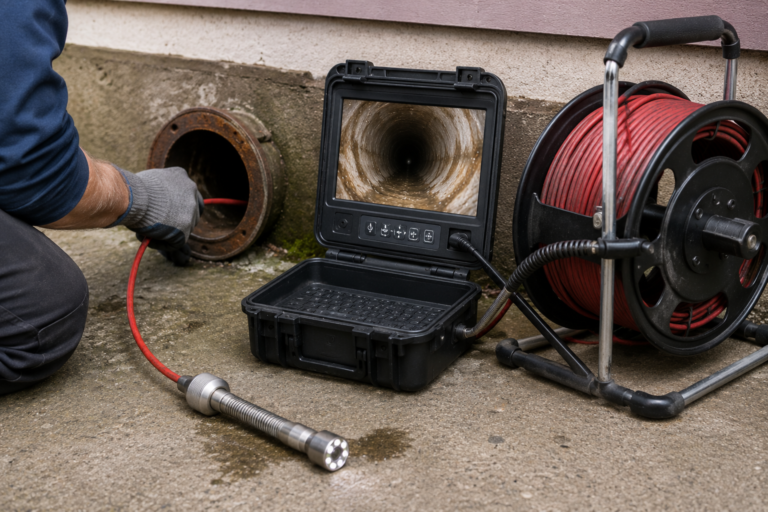
What a Sewer Camera Inspection Can — and Cannot — Tell You
Sewer cameras can reveal visible pipe conditions, roots, debris, offsets, and defects—but they have limits. Learn what camera inspection can and cannot establish.
Read the guide