
Plumbing Resource
Why Does a Toilet Keep Running? Common Causes and What the Symptoms Can Mean
A running toilet can involve the flapper, fill valve, water level, overflow tube, or flush mechanism. Learn what the symptoms may mean and what to check safely.
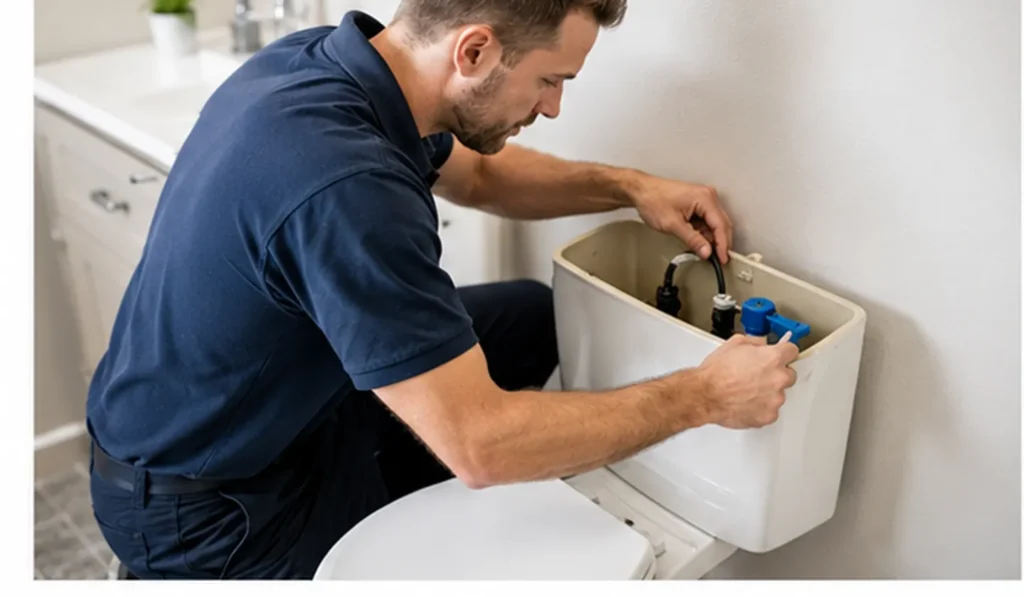
A toilet that “keeps running” can mean several different things. Some toilets run continuously after a flush. Others stop and then refill for a few seconds every few minutes. Some send water visibly into the overflow tube; others leak quietly from the tank into the bowl.
HOW A NORMAL TANK TOILET STOPS
After a flush, the flapper or flush seal closes, the fill valve refills the tank, and the valve should shut off at the correct water level. Continued water movement means something may not be sealing or controlling the level correctly.
FLAPPER OR SEAL
EPA WaterSense identifies worn flappers as a common source of leaks. If the seal is worn, warped, dirty, misaligned, or incompatible, water can seep into the bowl. The tank level drops and the fill valve cycles again.
THE DYE TEST
EPA recommends a simple dye test for certain tank leaks: place food coloring or a dye tablet in the tank, wait about 10 minutes without flushing, and see whether color appears in the bowl. Flush afterward to avoid staining.
A positive test shows tank-to-bowl leakage. It does not by itself prove exactly which part must be replaced.
FILL VALVE AND OVERFLOW
If the fill valve does not shut off, the toilet can run continuously. Observe whether water continues entering after the tank should be full or flows into the overflow tube.
WATER LEVEL
If water rises above the intended level, it can spill into the overflow tube even when the flapper seals. Use the toilet manufacturer’s markings/instructions rather than a universal adjustment number.
CHAIN OR FLUSH MECHANISM
A tangled or overly tight chain can prevent a flapper from closing. Handle/flush components can also interfere with normal operation.
INTERMITTENT RUNNING
A toilet that refills briefly every few minutes often means the tank is slowly losing water. A leaking flapper is one possibility, but the dye test and visual observation are better evidence than sound alone.
WHAT TO RECORD
Note whether running is continuous or intermittent, whether water enters the overflow tube, dye-test result, whether the issue began after part replacement, toilet model if visible, handle behavior, and whether there are other symptoms such as weak flushing or leakage at the base.
WHEN TO STOP
If the supply connection leaks, the shutoff valve is damaged, water reaches the floor, the toilet is unstable, or repair is beyond your comfort level, arrange service. Do not force a stuck valve or install incompatible parts.
Sources reviewed
Request Service
Call 1 725-745-6034Related Resources
Why Does the Same Drain Keep Clogging After Plunging?
If the same sink, tub, or shower keeps clogging after plunging, learn how recurrence patterns can help describe the problem before you call.
Read the guide
What Builds Up in Kitchen and Bathroom Drains—and Why Does It Keep Coming Back?
Kitchen grease and food differ from bathroom hair and soapy residue. Learn what can build up, why symptoms may return, and how to reduce new deposits.
Read the guide